
The Rise of AI Skills in Remote Job Listings
The remote job market is witnessing a significant surge in demand for AI skills.
·trends
By Kelvin Desman · ·
AI-native skills are now a key requirement for remote roles, from front-end developers to workshop facilitators.

Being AI-native isn't just a nice-to-have anymore; many remote job postings now list the ability to work with AI as a core requirement. This trend is popping up across various roles, from front-end developers to workshop facilitators.
TL;DR (Too Long; Didn't Read)
Tech companies and creative service firms are integrating AI into their daily workflows to speed up prototyping and reduce repetitive tasks. The CIOS job, for instance, explicitly asks for experience using AI-assisted tools to generate UI components faster. ShiftWorks is seeking facilitators who can design training materials with generative AI. This isn’t just experimental; it's a standard expectation for roles connected to digital products.
Tech layoff data show over 45,800 employees were let go in March 2026, but simultaneously, there's been an increased demand for talent who can use AI to boost productivity – not completely replace humans.
Pay for AI-native positions tends to be higher than for non-AI roles because of the value add. For example, the frontend dev role at JotPsych offers $5,000–$6,000 fixed-price for a migration project, well above the average web developer salary in many markets and even exceeding typical minimum wages. Meanwhile, a role like Kajabi Template Customizer at Alchemize Your Life After 50 pays $1,111–$2,222 fixed, showing that even niche projects recognize the value of AI-augmented design.
Working hours are also changing. Many of these positions offer full asynchronous flexibility, but there's an expectation of a minimum 2–4 hour overlap with teams in North America or Europe for real-time AI brainstorming sessions.
For instance, the Digital Storyboard Artist role at Social Motion only offers $250–$500 fixed, but stresses the importance of being able to draw concepts that will then be enhanced by AI-generated backgrounds. This shows that even with AI's help, the creative foundation remains a differentiator.
Even though being AI-native looks like a fast track to higher pay, many employers still weigh traditional portfolios and recommendations more heavily than AI certifications. If you're relying solely on AI courses without showing concrete results, you risk falling behind in the selection process.
The rise of AI-native skills is creating a bifurcation in the job market. On one side, we have roles that are being completely automated, particularly those involving repetitive tasks. On the other, we're seeing new roles emerge that require human-AI collaboration. These new roles often pay more because they require a unique blend of technical skills and human creativity.
For example, the SEO Specialist role at Law Offices of Matthew Cohan requires an understanding of both traditional SEO techniques and how to leverage AI tools for content creation. This hybrid skill set is in high demand and often comes with higher compensation.
As AI technology continues to evolve, we can expect to see even more specialized AI-native roles emerge. These roles will require a deep understanding of both the technical aspects of AI and the human factors involved in its application. The ability to effectively collaborate with AI tools will become a critical skill for many professions.
In conclusion, AI-native skills are no longer a luxury but a necessity for many remote roles. The ability to work effectively with AI tools is becoming a standard requirement, and those who can demonstrate this skill will have a competitive edge in the job market.
Not necessarily. Most positions are looking for familiarity with AI tools that work alongside the technology stack you already know, such as React or Webflow.
Generally 2–4 hours per day, adjusted to the time zones of the main team in the US or Europe, to allow for real-time collaboration.
Create personal projects that use AI to generate designs, code, or content, then document the process and results in a public repository or portfolio site.
Tools like Copilot, Figma AI, and various generative AI platforms are commonly requested. Specific tools may vary by industry, but familiarity with these platforms is a good starting point.
Even in non-technical roles like SEO, AI is being used to assist with content creation and analysis. The key is to understand how to leverage these tools while maintaining your unique human perspective.
Focus on developing skills that complement AI capabilities. This could include enhanced communication skills, creative problem-solving, and ethical decision-making. These skills are less likely to be automated and are highly valued in the job market.
Internal links:
Outbound links:
Internal links to jobs (minimal one per company):
The remote job market is witnessing a significant surge in demand for AI skills.
·trends

2026 job data shows AI tools are now required, not optional, for remote roles. See salary examples and what it means for remote professionals worldwide.
·trends
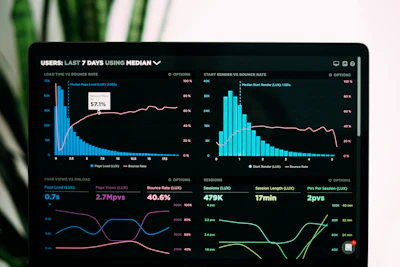
The remote job market is witnessing a significant surge in demand for technical and analytical skills, with AI, machine learning, and data analysis skills experiencing rapid growth in job postings. Th
·analysis

Why AI tools are now a must-have for remote professionals in 2026, and what it means for designers, marketers, and engineers worldwide.
·trend-report